If you’ve typed “fire hydrant maintenance services near me” into a search bar, you probably have one of three problems. A hydrant on your property hasn’t been looked at in years. An insurer or inspector has flagged one. Or you’ve just taken over a building and found out the hydrant in the parking lot is your responsibility, not the city’s.
All three are common across Grande Prairie, Dawson Creek, and the wider Peace Region, and all three have the same fix: a scheduled, documented maintenance visit by someone who knows how hydrants fail in cold-climate conditions. This guide explains what that visit involves, what separates a useful service from a box-ticking one, and how to get the work arranged without wasting a season.
First, Figure Out Whose Hydrant It Is
Before you call anyone, answer one question. Is the hydrant municipal or private?
Municipal hydrants sit on public water mains, usually along roads or in the right-of-way, and the municipality or its contractor looks after them. If a hydrant on the street in front of your building is buried in a snowplow berm or leaking at the base, that’s a call to the city or county.
Private hydrants are connected to a water line on your property. You’ll find them at industrial yards, shopping centres, apartment complexes, hospitals, schools, oilfield service shops, and larger commercial lots. The owner is responsible for keeping them working. Nobody else is going to do it for you, and nobody will tell you it’s overdue until a fire crew can’t use it.
Some sites have a mix. A multi-building complex might have two private hydrants on its own loop and a municipal one at the entrance. If you’re unsure, check your site servicing drawings, ask your property manager, or have a technician trace it during a site visit. Our hydrant identification and service overview covers how we sort this out for customers who inherit a property without good records.
What a Real Maintenance Visit Covers
Hydrant maintenance isn’t one task. It’s a sequence of checks and small corrective jobs that keep a hydrant ready to deliver water on the first try. A thorough visit usually includes the following.
- Exterior and access check. The hydrant needs to be visible and reachable. Technicians look for snow, vegetation, parked vehicles, fencing, landscaping, or stockpiled material in the way. A common working rule is to keep roughly a metre clear on all sides, with a clear path from the road.
- Body, paint, and cap condition. Cracked barrels, bent flanges, missing chains, seized caps, and stripped threads all show up here.
- Operating nut and stem. The nut should turn smoothly without binding. Worn or rounded nuts are a typical cause of slow operation during an emergency.
- Opening and flow test. The hydrant is opened fully, flushed, and closed again. This clears sediment and confirms water actually comes out at a useful volume.
- Drain check. Dry-barrel hydrants must drain after use. If they don’t, the water sitting in the barrel can freeze.
- Leaks and seals. Packing leaks at the stem, weeping at the nozzle caps, and drips at the base all get logged.
- Lubrication. Stem threads, nozzle cap threads, and other moving parts get the correct lubricant.
- Closing and restoring. The hydrant is closed, confirmed drained, caps are replaced, and the site is left tidy.
The visit should end with a written record of what was found, what was done, and what still needs attention. That record is what your insurer, fire department, or property manager will ask for. For the full list of what we do on a service call, see our hydrant maintenance page.
Inspection, maintenance, and repair are different jobs
People use these words interchangeably, and it causes confusion on quotes.
- Inspection answers “what condition is it in?” It’s observation and testing, with a report.
- Maintenance keeps a working hydrant working. Lubrication, flushing, adjustments, and cleaning.
- Repair fixes something broken: replacing a stem, barrel section, seat, gasket, or damaged nozzle.
A good provider does the first two together on a routine visit and flags anything that moves into the third category. If you only need a status check, say so. If you want the hydrant brought up to working order, say that instead. Our hydrant repair service picks up where the maintenance visit leaves off when parts need replacing.
Why Peace Region Winters Change the Work
A hydrant in a mild coastal city and one in Grande Prairie face different failure modes. Cold is the main one.
Most hydrants in northern Alberta and northeastern B.C. are dry-barrel designs. The main valve sits below the frost line, and the upper barrel is meant to be empty when the hydrant is closed. A small drain port at the base lets residual water seep into the surrounding gravel. When that drain gets plugged by silt, clay, or a failed gravel bed, water stays in the barrel. Then it freezes, and a frozen hydrant is a useless one. It can also crack.
That’s why a drain check isn’t optional here. Technicians often test it by closing the hydrant and checking for suction at the nozzle, or by monitoring how quickly the barrel empties. If it’s slow or not draining, the fix may be as simple as pumping out the barrel, or as involved as excavating and replacing the gravel pocket.
Seasonal timing matters too. A few practical points:
- Fall is the best window for service. You get a chance to find and fix drain problems before freeze-up.
- Spring service catches frost-heave damage, leaking packing, and anything that failed over winter.
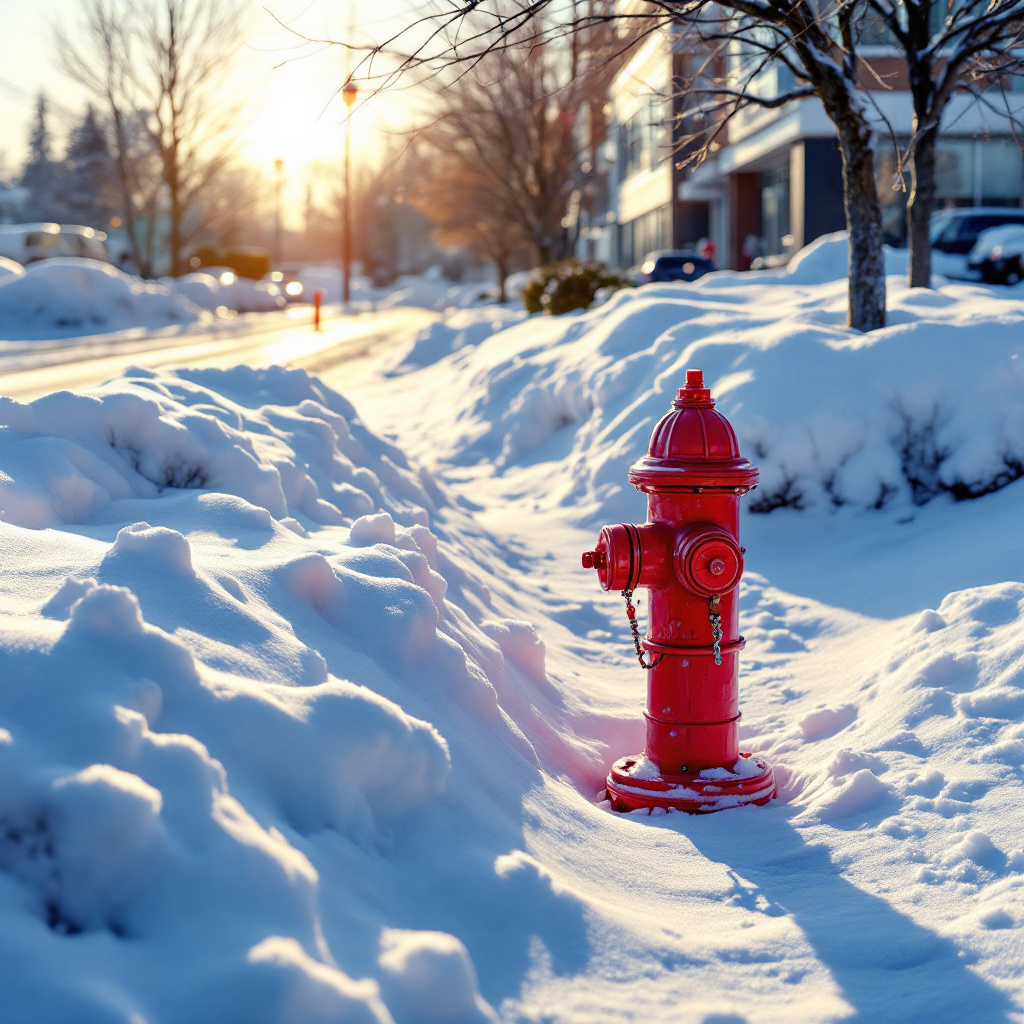
- Snow clearing is part of maintenance. A hydrant under a plow berm is functionally out of service.
- Flushing in freezing weather needs planning, since discharged water can ice over roadways or walkways.
Peace Region properties also see heavy equipment, long gravel yards, and oilfield or agricultural traffic. Hydrants in those settings take more impact damage than ones in a tidy suburban lot. Bollards, visible markers, and reflective flags are cheap compared to replacing a barrel.

Fire Hydrant Maintenance Services Near Me: What “Near” Should Actually Mean
Proximity matters, but not for the reason most people think. It isn’t about driving time to your site. It’s about whether the provider understands local conditions and can come back quickly when something goes wrong.
Here’s what to look for when you compare local options.
Regional familiarity
Ask whether the company works in your area regularly. A provider that services Grande Prairie, Dawson Creek, and surrounding communities knows the soils, the frost depths, the typical hydrant models in older and newer subdivisions, and how local fire departments want their reports. You can check where we operate on our service areas page.
Hydrant-first experience
Plenty of fire-protection companies treat hydrants as an add-on to sprinkler or extinguisher work. That’s fine for a quick visual look. It’s not fine when a stem is seized or a barrel won’t drain. Look for a team that handles hydrants as core work and can identify different manufacturers and models on sight. Parts compatibility is often the difference between a one-day repair and a three-week wait.
Clear documentation
Ask to see a sample report. It should list each hydrant by location or ID, the date, what was tested, what was found, and what was done. Photos help. If a company’s answer is “we’ll let you know if there’s a problem,” keep looking.
Range of related services
If your property has a hydrant, it probably also has other water-based systems: sprinklers, standpipes, backflow preventers on the domestic or fire line. Using one provider for several systems simplifies scheduling and record-keeping. We handle sprinkler inspections, backflow testing, and standpipe systems alongside hydrants, which means a single visit can cover more ground.
Proof of past work
Reviews and project examples are worth reading. Our portfolio shows the kinds of sites and jobs we’ve handled, and our about page explains who’s behind the work.
Signs a Hydrant Needs Attention Before Its Next Scheduled Visit
Don’t wait for the calendar if you see any of these.
- Water pooling or staining around the base. That’s a leak from a seal, a cracked barrel below grade, or a failing drain.
- Ice on or around the hydrant in winter. Frozen water above the ground often means the barrel isn’t draining properly.
- Caps that won’t turn. If a cap is seized, it’ll be worse in an emergency.
- Visible lean or damage. A hydrant knocked by a plow or truck may have a broken breakaway flange or a damaged stem, even if it looks fine from a distance.
- Faded or missing marking. Responders need to find the hydrant fast, often in the dark and in snow.
- Low pressure or flow reported by the fire department. This points to valve, line, or supply issues beyond the hydrant itself.
- Sound at the nozzle when closed. Hissing or trickling usually means the main valve isn’t seating.
If you notice more than one, call for service rather than waiting for the next round.
Preparing for a Service Call
A little prep shortens the visit and cuts the cost. Before the technician arrives:
- Gather what you know. Site plans, past inspection reports, install dates, and any notes on repairs help a lot.
- List the hydrants. Count them and mark them on a map, even roughly. If you aren’t sure how many there are, say so, and plan for the technician to survey the site.
- Clear access. Move parked vehicles, trim vegetation, and clear snow to the barrel.
- Tell neighbours or tenants. Flushing can discolour water temporarily and create noise or runoff.
- Confirm who must be notified. Some properties require notice to the local fire department or alarm monitoring company before a hydrant is opened.
- Note any known problems. If you’ve seen a leak or a slow cap, mention it up front.
If you don’t have records, that’s not a barrier. Many of our customers start with nothing, and the first visit establishes the baseline: where the hydrants are, what they are, and what shape they’re in.

What Affects Cost
We won’t pretend a single number covers every property, because it doesn’t. What actually drives the price:
- Number of hydrants. More units on one site means lower per-unit time.
- Condition. A hydrant that’s been neglected takes longer to free up and may need parts.
- Access and location. Hydrants buried in snow, behind fences, or spread across a large yard add travel and clearing time.
- Scope. Inspection-only is quicker than inspection plus lubrication, flushing, and minor adjustment.
- Repairs found. The service call and the repair are separate line items. A good provider quotes the repair before doing it.
- Timing. Emergency or off-season calls cost more than booked fall or spring visits.
The cheapest way to run a hydrant program is to book it on a regular schedule, fix small problems while they’re small, and keep records so the next visit starts from known conditions.
How Often Should Hydrants Be Serviced?
Most property owners ask this early, and the honest answer is that it depends on your requirements. Your insurer, your fire department, your local authority, and the applicable codes for your building type may each set expectations. Check with them to confirm what applies, and write it into your maintenance plan.
In practice, an annual visit is the common baseline for private hydrants in cold climates. A second pass in spring after a hard winter is smart for high-risk sites or where a hydrant has a history of problems. If your property is industrial or houses critical operations, build the hydrant schedule alongside your other fire-protection inspections so nothing slips.
Arrange Service Without the Guesswork
Getting hydrants serviced shouldn’t take a month of phone tag. Here’s a straightforward path.
- Decide whether you need identification, inspection, maintenance, repair, or all four.
- Pull together whatever records you have, even if it’s just a handwritten note about the last time someone looked.
- Send an enquiry or call the office with your site address and a rough hydrant count.
- Book a visit in the next fall or spring window, earlier if you’ve spotted any warning signs.
- Ask for the written report and keep it on file.
You can see the full list of what we offer on our services page, browse manufacturer and planning references in our resources section, or read more practical guides in Fire & Water Insights. When you’re ready, use the online enquiry on the site or call the office, and we’ll set up an inspection or quote for your property anywhere in the Peace Region.
A hydrant you’ve never had to think about is usually a hydrant someone has been quietly looking after. Make sure that someone is on your side.