Backflow testing checks the performance of a testable backflow-prevention assembly at the time of the test. A correctly selected, installed and maintained assembly helps prevent water flowing backwards out of a building’s plumbing, irrigation or fire line and into the drinking-water supply. A qualified tester uses calibrated equipment to check the components appropriate to that assembly and records the result; your utility’s program determines the required testing schedule.
The reason it matters is simple. Seals, springs and valves can wear or become fouled where nobody can see them. A device that looks fine can still fail a performance test.
This article covers why testing matters and when it is required, how to arrange it in Grande Prairie and the Peace Region, and what happens during a test. It also shows how to keep records across a site with several devices. FourPoint accepts backflow testing enquiries alongside hydrant, sprinkler and underground fire-line work, with requirements, qualifications and availability confirmed for the specific property.
Why backflow testing matters and when it is required
Backflow testing matters because internal parts can deteriorate out of sight. If protection fails and backflow occurs, substances from connected equipment or processes can enter the potable-water supply. Testing helps identify performance faults that appearance alone cannot establish.
A backflow preventer that has not been tested leaves an important question about its performance unanswered.
How backflow happens
A cross-connection is a temporary or permanent connection through which a contaminant could enter the drinking-water system, such as a connection involving irrigation, a boiler or a fire line. Backflow is the reversal of flow through that connection, and it has two main causes.
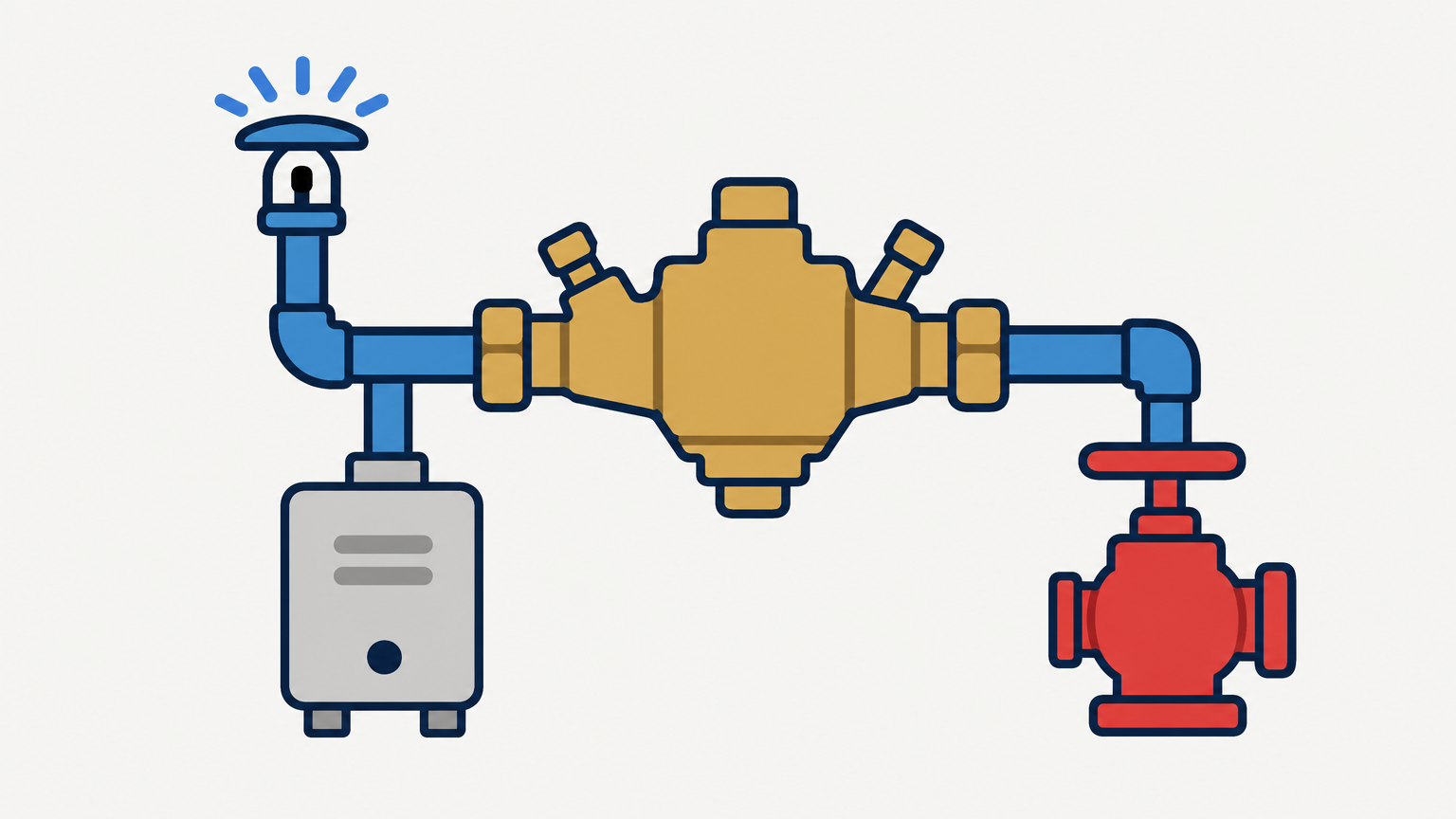
Backpressure happens when pressure on the private-system side exceeds supply pressure, for example from connected pumping or heating equipment. Backsiphonage happens when supply pressure drops and draws water backwards. Aquatera explains these conditions in its cross-connection control brochure.
Protection depends on the assembly type and installation. A pressure vacuum breaker protects against backsiphonage, not backpressure. The equipment must be suitable for the actual connection and hazard. Watts’ backflow-prevention guidance explains why vacuum breakers cannot be used for backpressure protection.
When testing is required
In Grande Prairie, Aquatera runs the cross-connection control program. Its published requirements for covered industrial, commercial and institutional premises include annual testing and testing after installation, relocation, repair, overhaul or cleaning. Confirm the assemblies, deadlines, accepted tester and paperwork for your property. Aquatera’s current program.
Dawson Creek and Fort St. John are in British Columbia, where the applicable BC requirements and supplying utility must be confirmed separately. The table summarises testing triggers to discuss with your provider.
| Trigger | What to confirm |
|---|---|
| New installation | Aquatera requires testing after installation; confirm commissioning and service requirements. |
| Annual testing | Annual testing of applicable testable assemblies under Aquatera’s program. |
| Repair, overhaul, cleaning or relocation | Arrange the testing required after the work and the utility’s reporting requirements. |
| Irrigation start-up | Confirm the local seasonal testing requirement and due date; do not assume every utility uses the same spring schedule. |
| Utility notice or survey finding | Follow the applicable instructions and deadline, and clarify the required scope. |
Required testing should not be left unresolved. The City of Grande Prairie’s Utility Bylaw C-1365, Schedule C addresses annual testing, failed tests and the utility’s response to non-compliance. A test result is one part of the property’s cross-connection responsibilities.
How to arrange backflow testing in Grande Prairie
Arrange testing by identifying the assemblies on your property, asking your water utility what it requires, and booking a tester whose credentials the utility accepts. Preparation helps avoid delays caused by missing equipment details or uncertainty about tester acceptance.
Find out what your utility accepts before you book anyone, not after the test is done.
Steps to get it done
- Identify the assemblies and connections. Review available records for irrigation, fire sprinkler lines, boiler make-up water, commercial equipment and the main water entry. A survey may be needed if the arrangement is unclear.
- Record the details. Gather the manufacturer, model, size, serial number and location of each assembly. Photographs of accessible nameplates help.
- Ask your utility what it requires. Confirm the testing schedule, accepted qualifications, report form and submission arrangements.
- Confirm the tester’s credentials. Verify utility acceptance and the required certification and test-equipment calibration.
- Book and prepare access. Clear access to the assembly. Discuss any water interruption and coordinate work affecting fire protection under the site’s procedures.
- File the report and keep a copy. Confirm who submits the result and retain the record with the property’s equipment history.
What drives the price
Request a quote identifying the assemblies and proposed work. Cost can depend on the number and type of devices, access, travel, reporting and whether investigation, repairs or retesting are needed. Confirm which activities are included and which require a separate quotation.
If you want FourPoint involved, call 587-297-2336 or send an inspection enquiry with your property address, device make and model, previous test reports and available photographs. FourPoint confirms backflow testing requirements, applicable qualifications, utility acceptance and availability before work is accepted. An online request does not book work.
What happens during a backflow preventer test
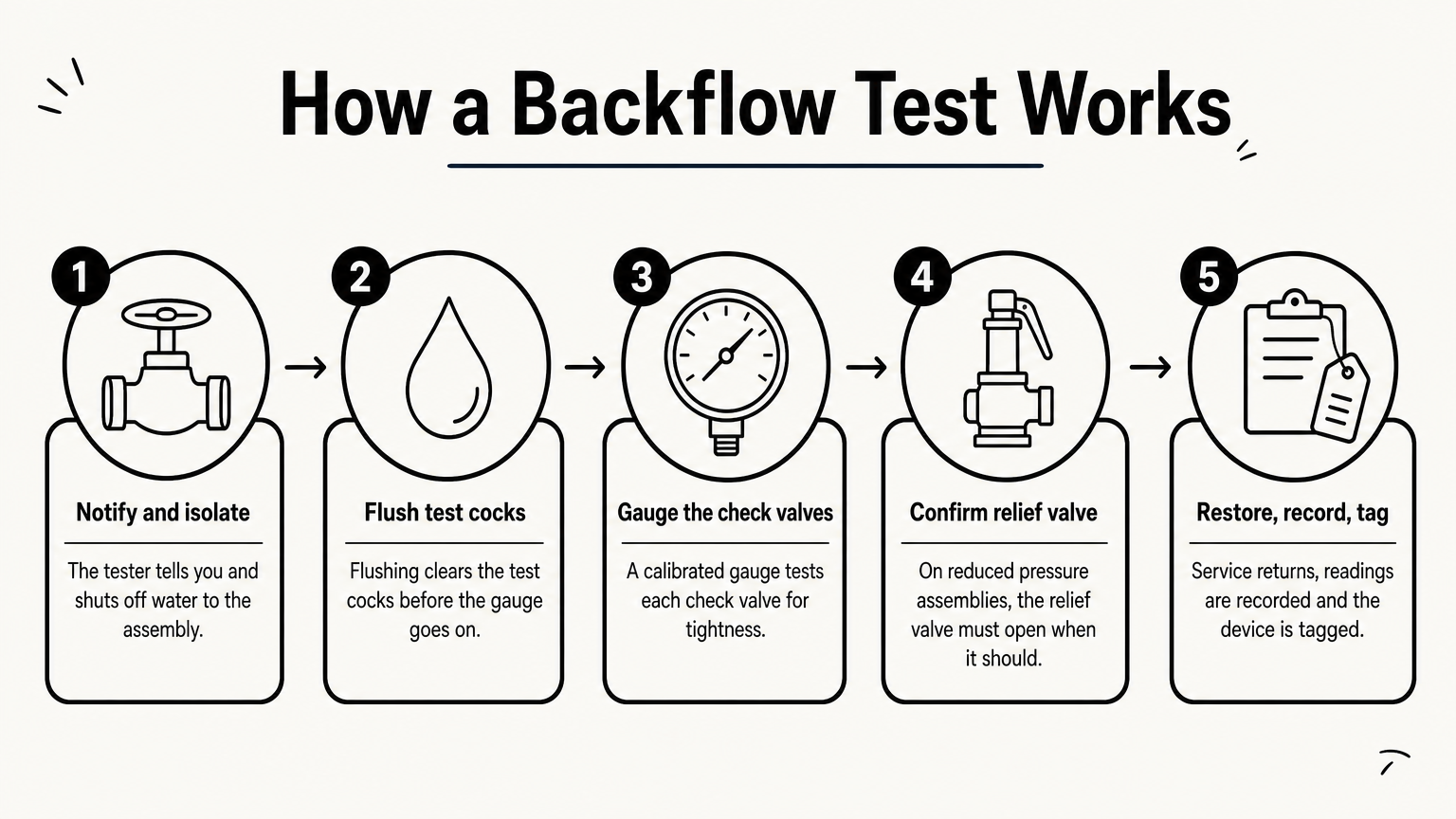
During testing, an appropriately qualified tester identifies the assembly, coordinates any required interruption and uses calibrated test equipment to assess it under the applicable procedure. The checks depend on the installed assembly type. This overview is for owners planning a service visit.
A useful test record identifies the assembly, tester, results and any follow-up work.
The steps of a test
The tester coordinates access and any interruption, prepares the assembly and test equipment, and performs the applicable checks. For a reduced-pressure assembly, the procedure includes checking its relief-valve operation as well as its check valves. Service restoration, readings, reporting and any tagging are handled according to the agreed work and applicable requirements.
Common assembly types
Assembly selection depends on the hazard, possible backflow conditions and applicable requirements. These examples do not determine which protection your property needs.
| Assembly | Possible applications | What the applicable test assesses |
|---|---|---|
| Reduced-pressure assembly (RP) | Connections needing the protection required for higher-hazard conditions | Check-valve and relief-valve performance |
| Double-check valve assembly (DCVA) | Approved lower-hazard connections, which may include some fire-line installations | Performance of both check valves |
| Pressure vacuum breaker (PVB) | Suitable irrigation connections subject to backsiphonage, not backpressure | Check-valve and air-inlet performance |
If the device fails
A failed test identifies a concern that needs action. Depending on the findings, qualified personnel may clean, repair or replace the assembly. Do not assume that a failed result identifies a particular faulty part or automatically requires replacement.
Arrange the required retesting and reporting after corrective work. Keep the failed result, repair record and retest result together. A passing assembly test does not, by itself, establish that the entire property is compliant or that its drinking water has been tested for quality.
Keeping backflow test records across a whole site
Keep an inventory of the assemblies with their test dates, results and corrective work. The same record supports a wider cross-connection control program, which considers water uses, connections, hazards and follow-up actions.
One inventory, one calendar and one filing habit help the site team track due dates and unresolved work.
A worked example
Consider a hypothetical commercial property in Grande Prairie with four testable assemblies covered by an annual program. The inventory below is an example, not an actual FourPoint project or a recommendation for selecting protection.
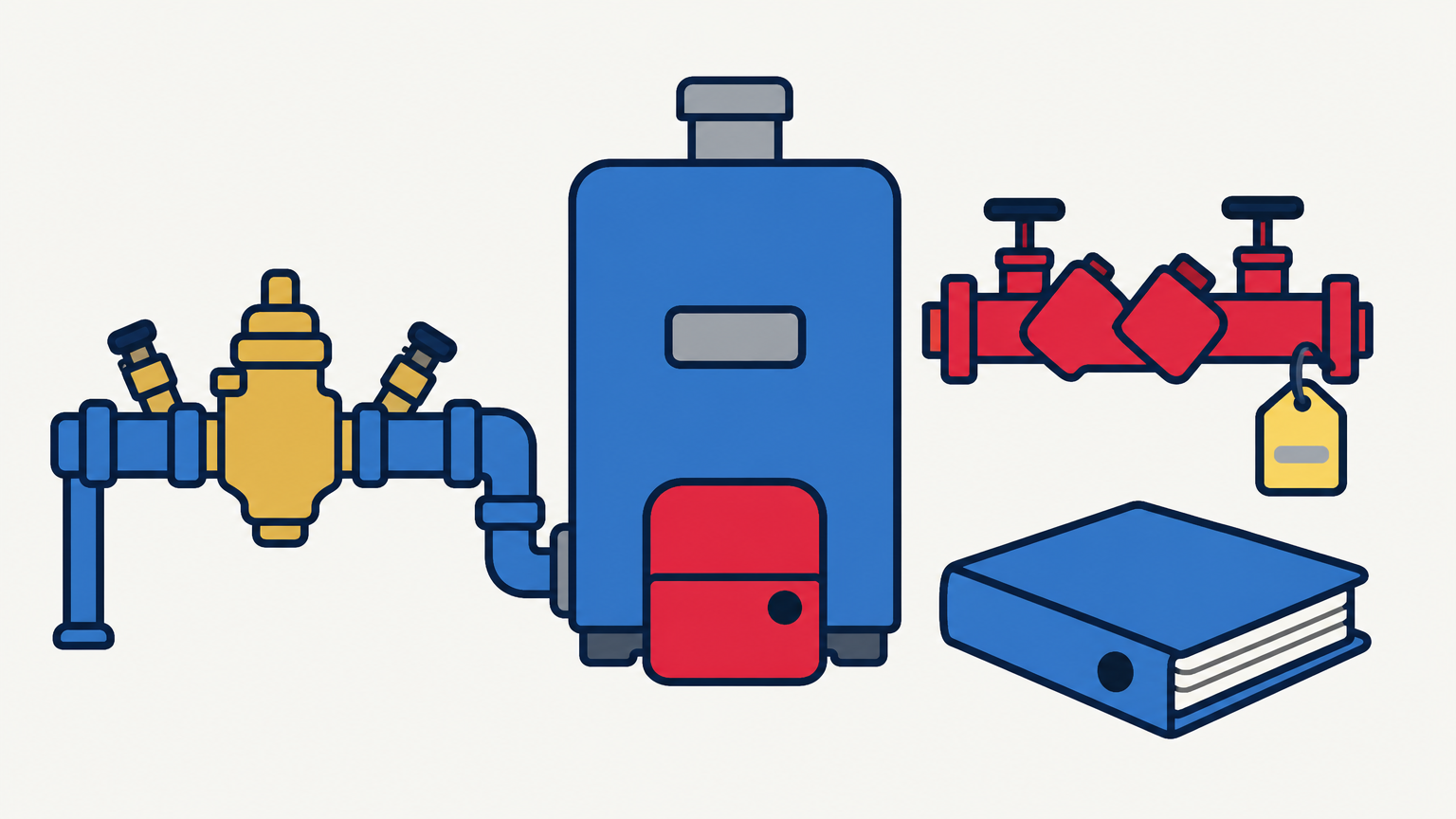
| Assembly in this example | Location | Testing plan to confirm |
|---|---|---|
| Irrigation PVB | Front landscaping | The utility’s applicable seasonal or annual due date |
| Fire-line DCVA | Mechanical room | Annual testing in this example; coordinate fire-protection interruptions |
| Boiler make-up RP | Boiler room | Annual testing in this example |
| Premises-isolation RP | Main water entry | Annual testing in this example |
Four routine assembly tests do not necessarily mean four separate visits. If an assembly fails, corrective work and retesting add to the work required; they may be coordinated in the same visit or need a further appointment.
What a good record contains
Each entry should identify the manufacturer, model, size, serial number, location, test date, tester, result, repairs and submission status. Keep the required tester and equipment details with the applicable report. An assembly-specific history can carry forward when staff or contractors change.
For sites unsure what is connected where, discuss a cross-connection survey. FourPoint agrees the survey scope and any related testing requirements for the specific property.
Getting your backflow preventer tested
Identify your assemblies, confirm the utility’s rules and accepted testers, arrange the work, and retain and submit the required reports. Follow a failed result through corrective work and retesting rather than leaving it unresolved.
If you manage a property in Grande Prairie, Dawson Creek or the wider Peace Region, send FourPoint your assembly details or request a quote. The office will confirm requirements, applicable qualifications, utility acceptance and availability before work is arranged. You can also email admin@fourpointfire.com.