POTABLE WATER PROTECTION

Cross-connection control

Understand where a drinking-water system could be exposed to another fluid or contaminant. Cross-connection control combines assessment, appropriate protection and an ongoing program of records and follow-up.

Grande Prairie · Dawson Creek · Peace Region

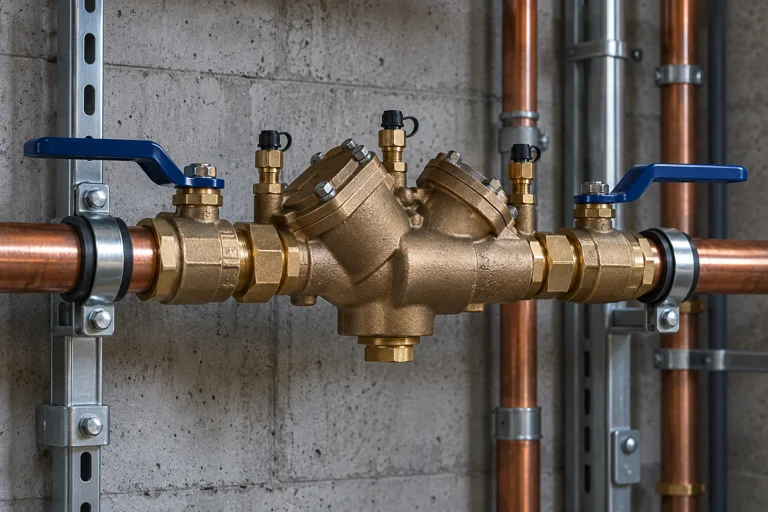
Illustrative bronze water-service assembly with blue-handled valves
AI-generated illustrative imagery. Not a FourPoint project, manufacturer product reference or installation detail.

TECHNICAL SCOPE / WITH CONTEXT

Plan the work.
Understand the record.

01

Identify the connection and the hazard.

A cross-connection can connect potable water to a potential contamination source. It may be temporary, such as a hose arrangement, or part of installed equipment. Backflow can arise from reduced supply pressure or pressure on the downstream side exceeding supply pressure. Identifying a potential pathway is different from confirming that contamination has occurred.

02

A survey is different from an assembly test.

A cross-connection survey reviews water uses, connections and potential hazards within its agreed scope. An assembly test evaluates a particular testable assembly. Passing one assembly test does not establish that every connection on a property has suitable protection. Define the area and systems to be assessed and record any limitations.

03

Select protection through the applicable process.

The appropriate protection depends on the hazard, connection arrangement and requirements of the responsible authority. Do not select a device solely by pipe size or a neighbouring installation. Design, installation and any approvals need the relevant qualified parties and current requirements.

04

Build a program that stays current.

Keep an inventory of identified connections and installed protection, required test records and corrective actions. Revisit the assessment when processes, equipment or plumbing arrangements change. Agree who schedules work, receives reports and follows unresolved items through to closure.

05

Confirm the local program before booking.

For sites within its program, Aquatera publishes cross-connection guidance, testing information and an approved-tester process. Its requirements must not be generalized to Dawson Creek or every Peace Region site. Confirm the actual water purveyor and jurisdiction. FourPoint’s applicable qualifications and approved-tester status have not been verified here and must be confirmed before regulated work is accepted.

VALUE TO YOUR SITE

Clarity you can
carry forward.

01

A clearer inventory of possible exposure points

02

A distinction between property assessment and individual assembly testing

03

A documented route for addressing changes and deficiencies

FREQUENTLY ASKED QUESTIONS

Before work begins.

Does one backflow assembly protect every use?

Do not assume so. The hazard and protection arrangement require assessment under the applicable program and design requirements.

Is a survey the same as water-quality testing?

No. A cross-connection survey examines potential pathways and protection within its scope; it is not a laboratory assessment of water quality.

Are the same rules used across the region?

Confirm the responsible authority and current requirements for each site. A utility’s program is not evidence of requirements in another service area.

START WITH THE SITE

A defined scope.
A useful next step.

Share your location, system information and the work you need to discuss.

Request a survey discussion

Local planning context.

Use the regional guides to prepare ownership, utility coordination and reporting questions. Contact FourPoint to confirm availability for the actual property.