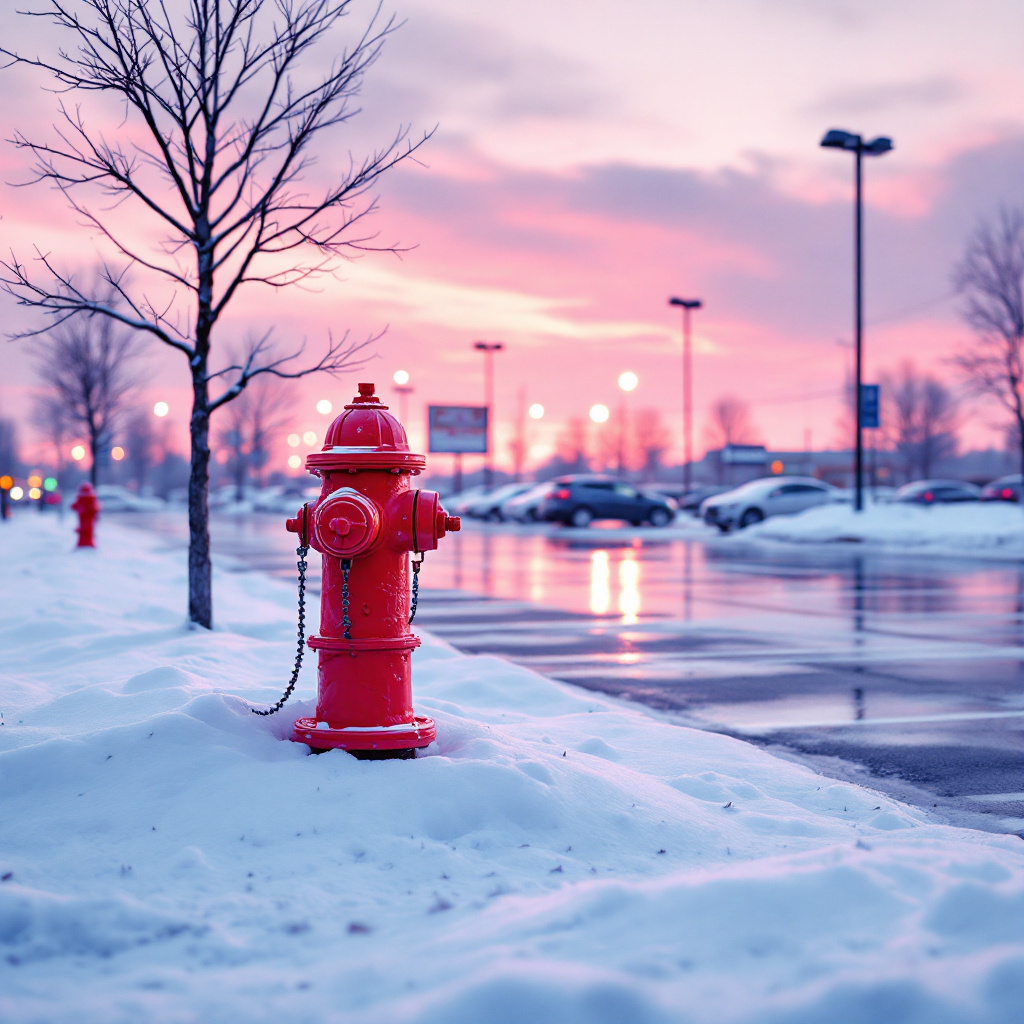
If you manage a building, a yard, or a site anywhere between Grande Prairie and Dawson Creek, your fire protection works only as well as its least-maintained part. A sprinkler system with a seized valve fails. A hydrant buried in a snowbank costs the fire department minutes it doesn’t have. A backflow preventer that hasn’t been tested leaves your water supply exposed. Peace Region fire protection comes down to knowing what you own, knowing when each piece needs attention, and having someone local who can get to it.
This guide lays out how the pieces fit together, what the regional conditions do to them, and how to build a service routine that doesn’t depend on someone remembering in November that nothing was done since last spring.
What Peace Region fire protection really involves
Most people picture a sprinkler head or a red hydrant. The real system is a chain, and it starts at the water main and ends at the last sprinkler or hose connection on your top floor.
That chain has four links:
- Water supply and hydrants. Public or private mains, and the hydrants on them.
- Building water-based systems. Sprinkler systems and standpipes.
- Water protection devices. Backflow preventers and the cross-connection controls that keep fire-line and process water out of the drinking supply.
- Records and scheduling. Inspection reports, deficiency lists, and repair follow-up.
A failure in any link weakens the rest. A building with perfect sprinklers and an unserviceable hydrant across the street still has a problem the first time a fire outgrows the sprinklers.
Why the Peace Region is a different place to maintain this equipment
Three local conditions shape the work.
Winter. Long, hard cold affects everything with water in it. Hydrants with a drain problem can hold water in the barrel and freeze. Dry-pipe sprinkler systems rely on air pressure and a working low-point drain routine. Unheated stairwells and mechanical rooms can drop below freezing during a cold snap. Snow load and plowing add their own damage to hydrants, especially the ones nobody flagged.
Distance. The region is big, and many industrial, agricultural, and rural commercial properties sit well outside town. Travel time is part of every service call, so bundling work (hydrants, sprinklers, backflow) into one visit saves real money. Check the service areas page to see where crews work.
Two provinces. Grande Prairie sits in Alberta and Dawson Creek in British Columbia. If you operate in both, expect different provincial rules, different local authorities, and sometimes different documentation expectations. Don’t assume a report format accepted in one place will satisfy the other. Ask your local authority and your insurer what they want to see.
Start outside: the hydrant side of the chain
Hydrants get overlooked because they’re out in the open and look indestructible. They aren’t. A hydrant is a valve, a stem, a set of seals, and a drain mechanism, and every one of those parts wears.
For property owners, the first question is often simple: which hydrants are yours? On large industrial sites, campuses, multi-unit developments, and mobile home parks, hydrants are frequently private. The municipality maintains the public ones on the street. The ones inside your fence line are on you. If nobody can say for sure, that’s a gap worth closing, and hydrant identification is the way to close it. A proper identification pass confirms location, type, ownership, and condition, and gives you a list you can schedule against. See the hydrant services overview for how that works.
What a hydrant inspection actually checks
A competent inspection isn’t a drive-by. Expect the technician to:
- Check that the hydrant is visible, accessible, and clear of snow, brush, vehicles, or stored material.
- Inspect the barrel, caps, chains, and threads for damage or corrosion.
- Operate the hydrant through its full travel and confirm it opens and closes smoothly.
- Check for leaks at the nozzles, stem, and base.
- Confirm the barrel drains after shutoff (a hydrant that stays full will freeze).
- Record condition, note deficiencies, and flag anything needing repair.
That last step matters most. A report that says “inspected” with no condition notes doesn’t help you plan. Ask for specifics.
Maintenance versus repair
They’re different jobs, and budgeting them separately keeps surprises smaller. Hydrant maintenance is the routine work: lubrication, exercising the valve, cleaning, minor adjustments. It’s cheap and it prevents most breakdowns. Hydrant repair is what happens when something has already failed or an inspection finds worn seals, a bad stem, a cracked nozzle, or a leaking base. Skipping maintenance for three years usually turns a small line item into a repair bill.

Inside the building: sprinklers and standpipes
Once water gets into your building, it’s handled by sprinkler systems, standpipes, or both.
Sprinkler systems
Sprinklers are the part of fire protection that works without anyone being present. That’s exactly why they need regular attention. Nobody notices a closed valve, a painted-over head, or a corroded pipe until the day it matters.
Three services keep a system dependable:
- Sprinkler inspections confirm that valves are open and supervised, gauges read correctly, heads are clean and unobstructed, and the system’s condition matches what’s on file.
- Sprinkler repairs correct what inspections find: leaking joints, damaged or loaded heads, faulty valves, drain issues.
- Sprinkler installations cover new buildings, tenant improvements, and expansions where existing coverage no longer fits the layout.
The most common deficiency in commercial buildings isn’t a failed system. It’s a changed building. A tenant adds storage racks to within a few inches of the ceiling, someone installs a drop ceiling, a warehouse bay gets partitioned, and the original sprinkler design no longer matches the space. If you’ve renovated or changed how a space is used, tell your fire-protection contractor before the next inspection, not after.
Standpipe systems
Standpipes give firefighters a water connection inside a building so they don’t have to drag hose from the street to the fifth floor. They show up in taller buildings, parkades, large-footprint commercial buildings, and some industrial facilities. They also get ignored, since they sit in stairwells and hose cabinets and nobody touches them for years.
Hose valves seize. Caps go missing. Connections get painted shut. Water-supply problems at the base of the riser go unnoticed. A standpipe system that’s been left alone is a system you can’t count on, and the fire department finds out at the worst possible moment.
The water-quality link people forget
Backflow and cross-connection control sound like plumbing, not fire protection. They’re both. Your fire line connects to the municipal supply, and anything that can push contaminated water back toward that supply is a public-health risk.
Backflow is water flowing the wrong way, usually when supply pressure drops (a main break, heavy hydrant use) and downstream water gets pulled backward. A cross-connection is any physical link between potable water and something that isn’t, like a fire sprinkler loop with antifreeze, a boiler feed, an irrigation line, or an industrial process.
The protection is a backflow preventer, and those devices need periodic testing to prove they still work. Backflow testing confirms the check valves and relief components hold. Cross-connection control goes a step further and looks at the whole site: where the connections are, what hazard each represents, and which device protects it.
A practical point: backflow test reports usually have to be submitted to the water utility or local authority. A test that was done but never filed can leave you out of compliance on paper. Confirm who receives the report and by when.
Build a yearly service calendar
The best-run properties in the region aren’t doing anything exotic. They schedule. Here’s a simple pattern that works for most commercial and multi-unit owners, adjusted to your own code requirements and insurer.
| Season | What to schedule | Why then |
|---|---|---|
| Spring | Hydrant inspection and maintenance, snow-damage check, valve exercising | Find winter damage while there’s a full season to repair it |
| Early summer | Backflow testing, cross-connection review, sprinkler inspections | Good access, good weather, time to file reports |
| Late summer | Repairs from the spring and summer findings, installations and expansions | Contractors are available and ground is workable |
| Fall | Pre-winter walk-through: dry-system checks, heated enclosures, hydrant clearance and marking | Fix freeze risks before they exist |
| Winter | Keep hydrants clear of snow, watch unheated spaces during cold snaps | Prevention is the only job |
This isn’t a code schedule. Inspection frequencies depend on the system type, the authority having jurisdiction, and your insurance requirements. Use the table as a rhythm, then overlay your actual obligations.

Mistakes that cost property owners the most
After enough site visits, the same problems keep turning up.
Treating inspection as a checkbox. Getting a certificate on file is not the same as having a working system. If the report lists deficiencies and nobody schedules the repairs, you’ve paid for information and ignored it.
Not knowing what you own. Owners of older or multi-phase developments often can’t say how many private hydrants they have or where every valve is. Start with a site walk and a written list.
Letting snow and landscaping win. Hydrants need clear access year-round. Plowed snow piles, new fencing, shrubs, and parked trailers all turn a reachable hydrant into a delay.
Splitting work across too many vendors. Hydrants with one company, sprinklers with another, backflow with a third means three schedules, three report formats, and nobody looking at the whole picture. Fewer vendors usually means better records.
Waiting for a failure. Fire-protection equipment sits idle for years and then must work perfectly. Reactive spending always costs more than planned spending.
How to choose a fire-protection provider in the Peace Region
You’ll get better results by asking a few direct questions before you sign anything.
- Can they cover everything you need? A single provider that handles hydrants, sprinklers, backflow, and standpipes simplifies scheduling and records. The full services list shows the range FourPoint covers.
- Do they work where you work? Confirm they serve your town, your rural site, and, if you span provinces, both sides of the border.
- What does the report look like? Ask for a sample. You want clear condition notes, deficiencies called out, and a format you can hand to an insurer or inspector.
- Can they show relevant work? Look through project examples, like those in the portfolio, and read customer reviews.
- Who do you actually call? A named contact and a direct line beat a general inbox when something’s leaking at 7 a.m.
If you want background on the company, the about page covers who’s behind the work.
Resources worth bookmarking
Two parts of the site help when you’re planning rather than reacting. The resources section collects manufacturer references, regional planning information, and fire-protection sources, which is handy when you need to match a hydrant model or track down parts information. The Fire & Water Insights section carries shorter practical articles on specific topics.
There’s also an Android application for access on the go, useful when you’re out on a site and need information without going back to a desk.
Your next step
Start small. Walk your property this week and write down every hydrant, riser, valve room, and backflow device you can find. Mark anything that’s blocked, damaged, or that nobody can account for. That one-page list is the most useful thing you can hand a contractor, and it makes a quote faster and more accurate.
When you’re ready, request an inspection or a quote through the online enquiry form, or contact the office or Kevin directly using the details on the site. Tell them what you have, where it is, and when it was last serviced. They’ll take it from there.