Fire protection Grande Prairie properties rely on comes down to five water-based systems that have to work on the day they’re needed: fire hydrants, sprinkler systems, backflow prevention assemblies, cross-connection controls, and standpipes. Each one needs scheduled inspection, and each one fails in predictable ways when it’s ignored. If you own or run a commercial, industrial, institutional or multi-unit property in the city or the wider Peace Region, your job is to know which of those systems you’re responsible for, when they’re due, and who services them. For hydrants specifically, knowing when they’re due and who provides fire hydrant services helps property owners choose the right provider in Grande Prairie.
This guide lays that out directly. It covers what each system does, what service it needs, how Grande Prairie’s climate changes the picture, and how to pick a provider without wasting a season on the wrong one.
The short answer
If you need a quick reference, here it is.
- Hydrants: Municipal hydrants on public streets belong to the municipality. Hydrants on private property, such as industrial yards, apartment complexes, shopping centres and campuses, are generally the property owner’s responsibility to inspect, maintain and repair.
- Sprinklers: Any building with a sprinkler system needs periodic inspection and testing, plus prompt repair of deficiencies.
- Backflow and cross-connection: Where your plumbing could let contaminated water flow back into the potable supply, you need an approved prevention assembly and regular testing.
- Standpipes: Buildings with standpipe systems need them inspected and flow-tested so firefighters have working water inside the structure.
- Records: Keep every inspection report. Insurers, fire inspectors and the authority having jurisdiction all ask for them.
The rest of this article explains the reasoning behind each point.
What fire protection Grande Prairie properties actually need
Not every building needs every system. A small warehouse might have a single private hydrant and no sprinklers. A seniors’ residence might have sprinklers, a standpipe, a domestic backflow assembly and a fire line backflow assembly. What you have depends on the building’s size, occupancy, age and the fire code requirements that applied when it was built or renovated.
Here’s how the systems compare.
| System | What it does | Typical service | Where to read more |
|---|---|---|---|
| Fire hydrant | Supplies large volumes of water for firefighting outside the building | Inspection, flushing, maintenance, repair, identification | Hydrants |
| Sprinkler system | Detects heat and discharges water automatically at the fire | Inspection and testing, repair, new installation | Sprinkler inspections |
| Backflow prevention assembly | Stops water from reversing into the potable supply | Annual testing, repair, replacement | Backflow testing |
| Cross-connection control | Identifies and manages points where contamination could reach drinking water | Surveys, device selection, program management | Cross-connection control |
| Standpipe system | Gives firefighters water connections inside multi-storey or large buildings | Inspection, flow testing, repair | Standpipe systems |
Your building’s fire plan, your insurer’s requirements and the local fire department’s expectations decide the exact list. If you’re unsure what’s installed, a walk-through is the fastest way to find out. Many owners discover a forgotten private hydrant or an untested backflow assembly during that first visit.
Hydrants: public, private, and why the distinction matters
Hydrants cause the most confusion because they look identical whether the city owns them or you do.
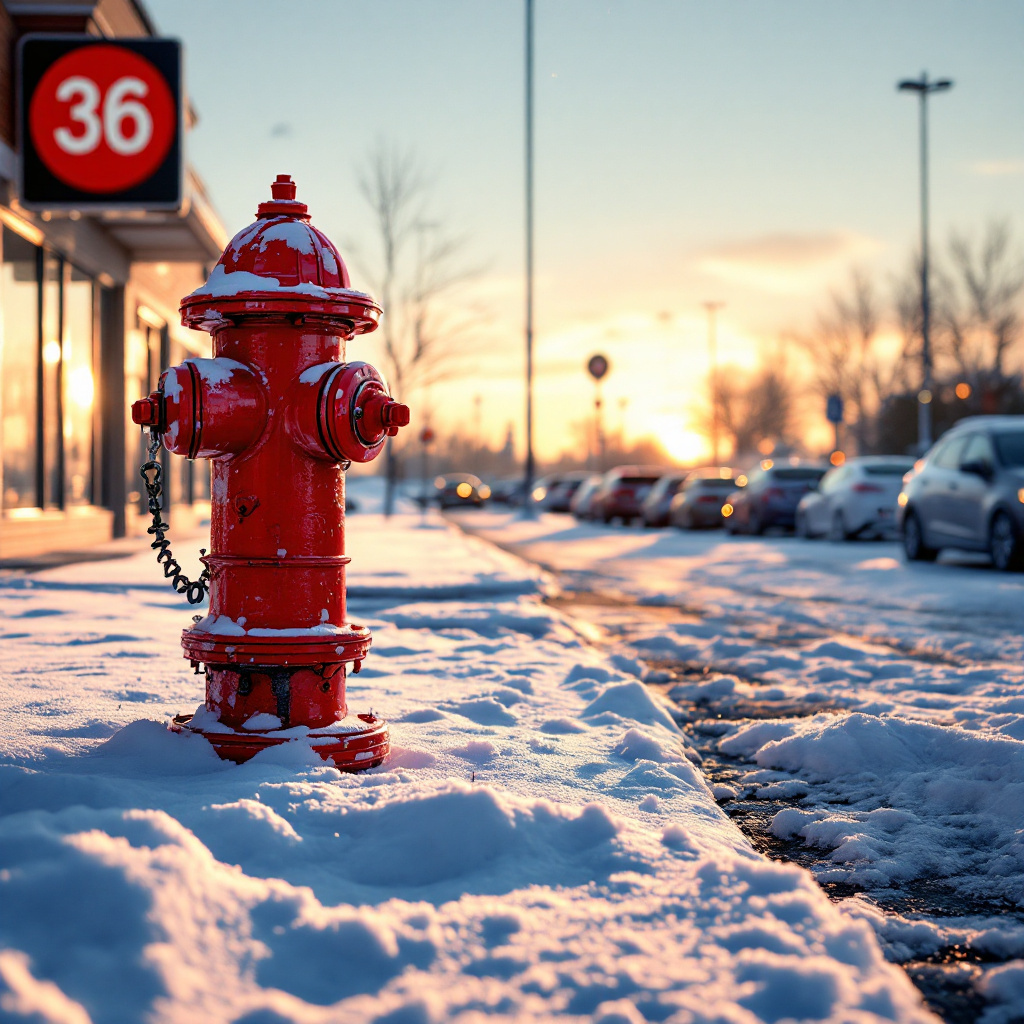
A hydrant on a public road or boulevard is typically municipal. A hydrant inside your fence line, along a private drive, or fed by a private water main is yours. When it’s yours, nobody else is checking it. If it’s buried in a snowbank, leaking at the cap, or has a seized operating nut, the first person to find out may be a fire crew arriving at your site.
What a hydrant service visit covers
A proper hydrant inspection isn’t a drive-by. The technician operates the hydrant, checks the barrel and nozzles, confirms the valve opens fully and closes cleanly, looks for leaks at the caps and base, verifies drainage on dry-barrel units, and records the condition. Maintenance adds lubrication, cap and thread care, and cleanup. Repair covers worn seals, damaged nozzles, broken stems, and replacement of parts that no longer function. You can read the detail on the hydrant maintenance and hydrant repair pages.
Winter is the hard part
Grande Prairie winters punish hydrants. Dry-barrel hydrants are designed to drain below the frost line after use. If the drain port is plugged or the ground is saturated, water sits in the barrel and freezes. A frozen hydrant can’t be opened, and forcing it breaks parts.
Three habits prevent most winter failures:
- Test drainage after any use or flushing, not just in the fall.
- Keep snow cleared around each hydrant, with space for a wrench and hose connection.
- Flag hydrants with tall markers so plows and fire crews can find them.
Identification matters too
Fire crews need to know which hydrants exist, where they are, and what flow they can deliver. Hydrant bonnet and cap colours commonly signal available flow, and a missing or faded colour code forces responders to guess. If your site has hydrants that aren’t mapped or labelled, hydrant identification is a simple fix that pays off the first time you need it.
Sprinkler systems: inspection, repair, installation
A sprinkler system sits quietly for years. That’s why it fails quietly too.
Inspections check the things that stop a system from working: closed or partially closed control valves, corroded or painted-over sprinkler heads, low air or water pressure, damaged piping, obstructed heads (storage stacked too high is a classic), and faulty alarm devices. Inspection frequency varies by component. Some items are checked weekly or monthly by the owner or their staff, while others need a qualified contractor quarterly or annually. Your fire code and insurer set the specifics, so ask which schedule applies to your building. See sprinkler inspections for the service outline.
Repairs follow deficiencies. A leaking joint, a painted head, a failed valve supervisory switch: each is small when caught early and expensive when it isn’t. A sprinkler repair done promptly also keeps your inspection report clean. A system with open deficiencies can raise questions with your insurer.
Installations come up in new builds, tenant improvements and renovations. Changing how a space is used often changes the hazard, and the sprinkler layout has to follow. Adding walls, mezzanines or racking without revisiting coverage is a common way to create blind spots. For new work, see sprinkler installations.

Backflow testing and cross-connection control
These two get lumped together, but they do different jobs.
A cross-connection is any point where a potable water line could connect to something that isn’t potable: a boiler feed, an irrigation system, a fire line with antifreeze or stagnant water, a process tank. If pressure drops in the municipal main, contaminated water can be drawn backward into the drinking supply. That’s backflow.
A backflow prevention assembly is the device that stops it. Because it contains check valves and relief components that wear, it has to be tested. Annual testing is the common requirement, and a failed assembly needs repair or replacement before it goes back in service. The backflow testing page explains what happens on a test visit.
Cross-connection control is the bigger program around those devices. It starts with a survey to find every connection that poses a risk, then matches the right type of protection to each hazard, then keeps the testing schedule and records organized. A building with a dozen assemblies and no tracking system is a building with overdue tests. See cross-connection control for how that program works.
Fire lines deserve a special mention. A dedicated fire service connection often has its own backflow assembly, separate from the domestic one. Owners sometimes test the domestic device and forget the fire line.
Standpipe systems
In a multi-storey building, firefighters can’t run hose from a truck to the fourth floor in time to matter. A standpipe system gives them hose connections inside the building, usually in stairwells, supplied by a vertical pipe.
What goes wrong: closed valves, missing caps on hose connections, corroded or damaged outlets, and supply problems that only show up under flow. A standpipe that’s never been flow-tested may look fine and still deliver poor pressure. Regular inspection and testing catch those issues while there’s time to fix them. Details are on the standpipe systems page.
A practical inspection calendar
Exact intervals depend on your building, your fire code and your insurer, so confirm them. Still, a working calendar helps. Here’s a simple way to structure the year.
- Spring: Walk the site after thaw. Check hydrants for leaks, damage from plows and drainage problems. Book backflow tests before the busy season fills the schedule.
- Summer: Do hydrant flushing and maintenance, standpipe checks, and any sprinkler repairs flagged earlier. Construction and renovation windows are open, so schedule installations and modifications now.
- Early fall: Confirm sprinkler control valves are open and supervised, check heated enclosures for fire risers, and verify hydrant drainage before freeze-up.
- Winter: Keep hydrants cleared of snow, respond to any impairment immediately, and file all reports from the year.
Whenever a system is shut down or impaired for any reason, tell your insurer and the fire department’s contact, and put someone on watch if your building’s rules require it. Don’t leave a closed valve to be discovered later.
Common mistakes we see in the Peace Region
Most problems are boring and avoidable.
- Assuming the city handles every hydrant. It doesn’t. Private hydrants stay with the owner.
- Letting reports pile up unread. A deficiency list that’s ignored for two inspections becomes a larger repair and an uncomfortable conversation with an insurer.
- Storage creep. Pallets and shelving climb toward the sprinkler heads, blocking discharge.
- Painting over components. Heads, gauges and hydrant caps get painted during maintenance and stop working correctly.
- Forgetting seasonal access. A hydrant that’s perfectly serviceable in July is useless under a plow berm in January.
- One provider per system, no coordination. Splitting hydrants, sprinklers and backflow across vendors means more calls, more paperwork and more gaps.

How to choose a fire protection provider in the Peace Region
Compare providers on practical points, not just price.
- Scope: Can one company handle hydrants, sprinklers, backflow and standpipes? Fewer vendors means simpler scheduling and a single point of contact.
- Local coverage: Travel time and winter conditions matter. A provider based in the region knows the roads, the ground conditions and the local fire departments. FourPoint serves Grande Prairie, Dawson Creek and the wider Peace Region (see service areas).
- Reporting: Ask what you’ll receive after a visit. You want clear findings, deficiencies listed, and records you can hand to an inspector.
- Proof of work: Look at project examples and customer reviews. The portfolio shows past work, and the about page covers who you’d be dealing with.
- Responsiveness: When you ask for a quote, how quickly and clearly do they answer?
FourPoint Fire & Water is hydrant-first, with the broader sprinkler, backflow, cross-connection and standpipe services alongside it. You can see the full list on the services page, and find planning references and manufacturer information in the resources section and the insights library.
Frequently asked questions
Who is responsible for fire hydrants in Grande Prairie?
The municipality is generally responsible for hydrants on public streets. Owners are responsible for hydrants on private property and private water mains, including inspection, maintenance and repair.
How often should a private hydrant be inspected?
Annual inspection is a common baseline, with extra checks after use, after freezing weather and before winter. Confirm the requirement that applies to your property with your insurer or the local authority.
What does fire protection include for a commercial building?
Depending on the building, it can include hydrants, sprinkler systems, standpipes, backflow prevention assemblies and a cross-connection control program, all of which need scheduled inspection, testing and records.
Do I need backflow testing if I already have a sprinkler system?
Often yes. Fire service lines frequently have their own backflow assembly, and domestic water lines have separate ones. Each assembly gets tested.
Can one company handle all of it?
Yes. Working with a single provider for hydrants, sprinklers, backflow testing and standpipes reduces scheduling effort and keeps your records in one place.
Your next step
Start with a list of what’s on your site: hydrants, sprinkler risers, backflow assemblies, standpipe connections. Note the last inspection date for each. Gaps in that list tell you where to start.
When you’re ready for an inspection or a quote, use the online enquiry form on fourpointfire.com or contact the office or Kevin directly using the details on the site. Tell us the location, the systems you know about and any deadlines from your insurer or a fire inspector, and we’ll take it from there.